

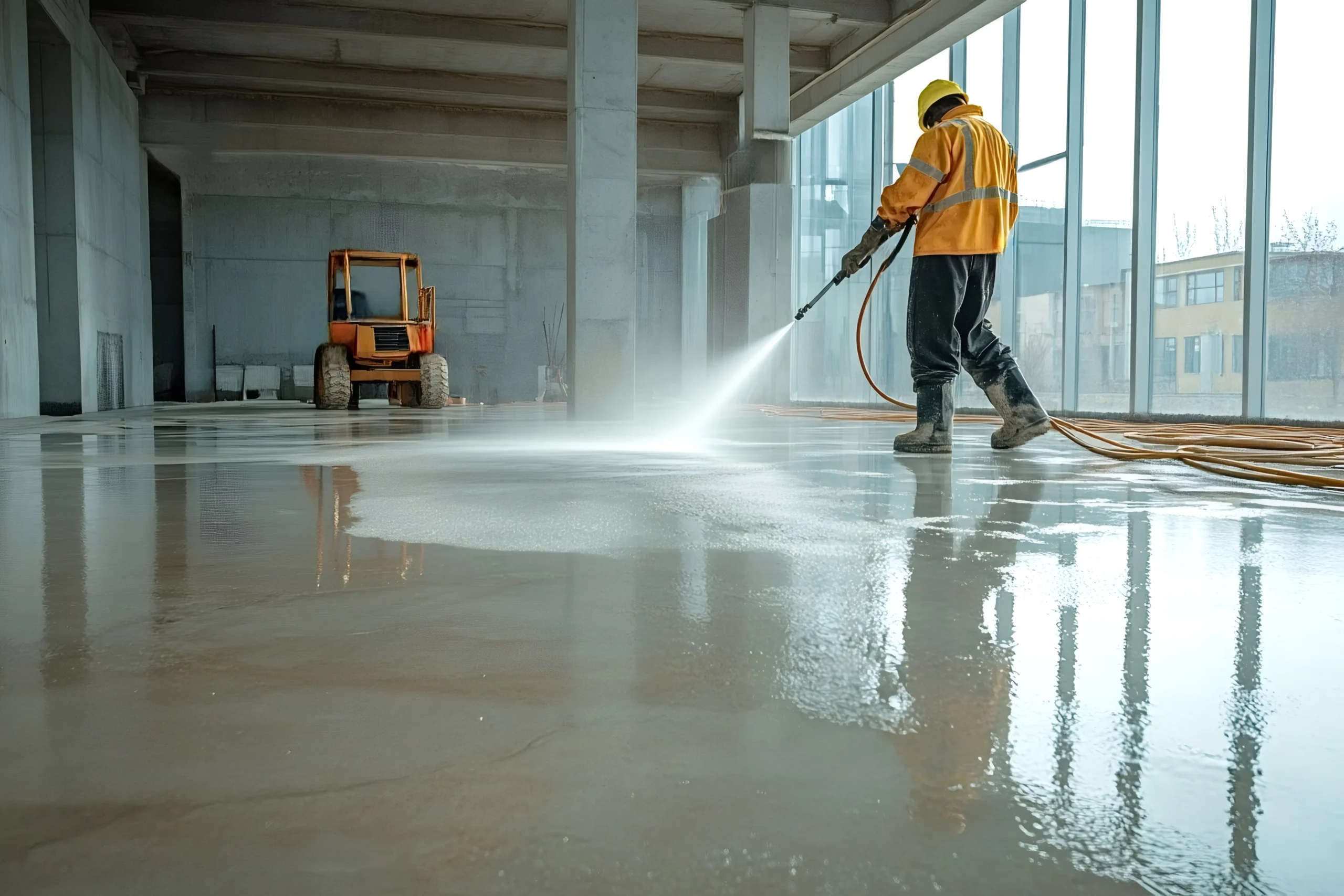
Have you ever walked into a newly finished space and thought, “Why does this still feel like a jobsite?”
That reaction is more common than most contractors, property managers, and business owners expect. A project can be technically complete, but if fine dust is still settling on surfaces, adhesive residue is clinging to glass, and debris is hiding in corners, the space does not feel ready. It feels unfinished. And that matters more than people think.
There is also a real health and safety angle here. The EPA notes that levels of some volatile organic compounds can average 2 to 5 times higher indoors than outdoors, and after certain activities such as paint stripping, they can spike to 1,000 times outdoor background levels for several hours. Add renovation dust, airborne particles, and leftover debris, and “finished” can quickly become uncomfortable or risky.
That is where post construction cleaning earns its keep. Done properly, it does far more than make a site look tidy. It improves indoor air quality, reduces hazards, protects new finishes, speeds up handover, and helps you avoid costly rework. In this guide, you will learn the five biggest benefits, what smart buyers look for in 2026, and how to tell whether a cleaning scope is actually professional or just cosmetic.
Quick answer: Why does post construction cleaning matter?
Post construction cleaning matters because it removes the dust, debris, residue, and fine particles that regular cleaning misses. That means a safer space, healthier indoor air, better protection for new surfaces, a stronger first impression, and a faster path to occupancy or reopening.
What makes post construction cleaning different from regular cleaning?
Regular cleaning is about maintenance. Post construction cleaning is about recovery.
That distinction is critical. A normal cleaning team is usually set up to handle routine dusting, mopping, restroom sanitation, and surface care. An after construction cleaning crew deals with a completely different problem set: drywall dust, sawdust, caulk smears, paint specks, sticker residue, grout haze, plastic film, and debris tucked into vents, tracks, ledges, light fixtures, and cabinet interiors. EPA guidance on indoor pollutants makes it clear that building materials and particles are major contributors to indoor air quality problems, while NIOSH has specifically warned that practices like dry sweeping construction debris can send contaminated dust back into the air.
In plain English, this is not just “cleaning, but more.” It requires different equipment, sequencing, chemicals, PPE, and judgment. The crew has to know which surfaces can handle aggressive dust removal and which ones can be scratched, dulled, or stained by the wrong product or pad.
Mini case study: small office fit-out
A newly renovated office may look almost ready on first walk-through. Then daylight hits the glass and suddenly you see adhesive marks, fingerprints, dust on cable trays, and powder collecting around baseboards. That is the classic post-build illusion: the space looks good from ten feet away and unfinished from two feet away.
What I have learned is simple: when people skip specialized cleanup, they pay for it later in complaints, callbacks, and awkward reopening days.
Pro tip: If a vendor cannot clearly explain the difference between rough clean, final clean, and touch-up clean, they probably are not a true post-construction specialist.
How does post construction cleaning improve health and indoor air quality?
This is the biggest benefit, and it is the one too many buyers underestimate.
Construction and renovation work create a messy mix of particulates and chemical residues. Dust from drywall, wood, concrete, insulation, and silica-containing materials does not just sit visibly on countertops. It travels into air returns, settles on horizontal surfaces, and gets stirred back up every time someone walks through the space. NIOSH has long warned that construction dust can become airborne during cleanup, especially when crews dry sweep instead of using dust-controlled methods. The agency also defines HEPA filtration as capturing at least 99.97% of particles at 0.3 microns, which is exactly why HEPA-equipped vacuums and air-cleaning systems matter so much after a build.
There is also the chemical side. The EPA says some indoor VOC levels average 2 to 5 times higher indoors than outdoors, and can jump dramatically after activities like paint stripping. That means a freshly renovated environment can look pristine while still feeling irritating, stuffy, or headache-inducing if cleanup and ventilation are weak.
A good cleaning after renovation plan tackles both problems. It removes settled dust with HEPA vacuuming, damp-wipes hard surfaces instead of re-aerosolizing particles, and helps prepare the space for proper ventilation and HVAC restart.
Mini case study: medical clinic refresh
Imagine a clinic that replaces flooring, repaints treatment rooms, and updates cabinetry over a long weekend. If dust remains in vent grilles and millwork, staff may return Monday morning to irritation, odor complaints, and immediate distrust of the “new” space. A professional post-build cleanup changes that outcome. The goal is not just a shiny floor. It is a room that feels breathable, settled, and ready for people.
Expert insight: In 2026, health-first cleanup is becoming the real differentiator. Clients are no longer impressed by “we wiped everything down.” They want HEPA protocols, residue control, and a space that actually feels ready to occupy.
Why does post-construction cleaning make the site safer right away?
Because debris is not just ugly. It is hazardous.
OSHA’s housekeeping guidance is blunt: walking-working surfaces should be kept clean and dry, and aisles and passageways must be kept clear of obstructions that create hazards. OSHA also notes that poor housekeeping increases the risk of slips, trips, falls, blocked exits, and even fire.
That is not a theoretical concern. In 2024, OSHA’s construction fall-prevention campaign cited 389 fatal falls from elevation out of 1,034 construction fatalities. Even if leftover dust or debris is not the only cause of these incidents, cluttered and poorly controlled sites absolutely increase the chances of something going wrong.
When you bring in a serious debris removal service, you reduce immediate risk in several ways:
- sharp offcuts, packaging, and loose materials are removed
- pathways are cleared for staff, tenants, inspectors, or clients
- dust on smooth flooring is reduced before it becomes a slip issue
- emergency access points stay visible and usable
Mini case study: retail store opening
A retail tenant finishes its fit-out two days before opening. Shelving is installed, graphics go up, product arrives, and everyone is in a rush. Without proper cleanup, cardboard, tags, protective films, and fixture dust turn the back-of-house into chaos. In that situation, post construction cleaning is not a luxury add-on. It is the difference between a controlled opening and a messy, stressful first day.
What smart operators do: They schedule one cleanup after heavy works finish, then a lighter touch-up clean right before handover or opening.
How does debris removal service protect your new finishes and materials?
This is where people try to save money and accidentally create rework.
Freshly installed spaces are vulnerable. Glass scratches. Stone etches. Stainless steel shows every smear. Wood surfaces can be dulled by the wrong chemical. Paint can be marred by abrasive pads. And fine dust left sitting on floors or counters becomes gritty enough to damage surfaces during routine use.
EPA guidance on renovation-related cleanup emphasizes methods like HEPA vacuuming, wet wiping, and wet mopping specifically because they remove dust and debris without simply spreading it around. EPA’s lead-safe renovation materials also stress that ordinary cleanup methods are not always sufficient and that HEPA vacuums are required in certain regulated renovation settings.
That matters beyond lead-related work. The principle is the same: improper cleanup can turn a finished installation into a warranty problem.
And the volume of waste is no joke. The EPA estimates the United States generated 600 million tons of construction and demolition debris in 2018, more than twice the amount of municipal solid waste generated that year. That statistic tells you something important: debris management is not a minor side task. It is a major operational issue.
Comparison table: DIY cleanup vs professional post-build cleaning
| Factor | DIY or general cleaning | Professional post construction cleaning |
| Dust removal | Often surface-level | HEPA-focused, detail-oriented |
| Finish protection | Higher risk of scratching or dulling | Surface-specific methods and products |
| Debris handling | Usually inconsistent | Structured removal and disposal |
| Vent, track, and edge detail | Frequently missed | Included in detailed scope |
| Handover readiness | Unpredictable | Built around inspection standards |
| Rework risk | Higher | Lower |
Pro tip: Ask vendors exactly how they clean glass, stone, stainless steel, painted surfaces, and HVAC-adjacent areas. Vague answers are a red flag.
Can post construction cleaning speed up handover and improve first impressions?
Absolutely. In many projects, that is the hidden ROI.
People judge readiness fast. A property owner, tenant, investor, buyer, or operations lead may not notice the quality of your subfloor prep or electrical rough-in, but they will notice dusty ledges, cloudy glass, gritty floors, and residue around hardware. Fair or not, the visual condition of the site becomes a proxy for overall quality.
A proper after construction cleaning service helps every stakeholder move faster. Inspectors can access areas clearly. Property managers can stage or furnish sooner. Marketing teams can photograph the space without spending hours hiding flaws. And tenants or clients walk into something that feels polished rather than half-finished.
What I have learned from service-page strategy is this: buyers do not really purchase cleaning. They purchase confidence. They want the moment where a chaotic build becomes a usable environment.
Mini case study: luxury residential renovation
Picture a high-end apartment renovation with new marble-look tile, black fixtures, custom joinery, and full-height glass. The builder finishes on schedule, but the handover photos still show grout dust in corners and smudges on metal finishes. One skilled cleanup crew later, the same space looks premium. Same project. Completely different perception.
That shift matters commercially. If you are leasing, selling, reopening, or trying to wow a client, first impressions are not fluff. They affect trust, close rates, and how many follow-up complaints you get in the first week.
Does post construction cleaning save money compared with doing it yourself?
Most of the time, yes. And the reason is simple: DIY cleanup usually underestimates the real cost.
On paper, in-house cleanup seems cheaper. In reality, you often end up paying through lost time, inefficient labor, damaged finishes, repeat visits, delayed opening, or a second cleaning because the first one was not detailed enough. If employees or tradespeople are doing cleanup with the wrong equipment, they are not doing the work you actually hired them for.
Professional post construction cleaning also reduces the chance of using the wrong tools. EPA guidance for renovation dust cleanup specifically points to HEPA vacuums and wet-cleaning methods; that alone tells you why a standard broom-and-shop-vac approach can be the wrong call in sensitive situations.
There is also a sequencing benefit. Good teams know how to clean in stages:
-
Rough clean
Removes bulk debris, packaging, and obvious waste after major trades finish.
-
Final clean
Targets dust, films, smears, fixtures, edges, and presentation-level detail before handover.
-
Touch-up clean
Handles fresh smudges or resettled dust right before occupancy, staging, or opening day.
That staged approach is often cheaper than scrambling after complaints.
Actionable takeaway: If you want apples-to-apples quotes, ask every vendor whether their price includes rough clean, final clean, touch-up clean, debris haul-away, interior glass, vent covers, cabinet interiors, and floor protection removal.
What should you expect from a professional post construction cleaning checklist in 2026?
In 2026, the standard is rising. Clients are more informed, indoor-air expectations are higher, and “just mop and vacuum it” no longer cuts it.
A strong post construction cleaning checklist should include:
- HEPA vacuuming where fine dust is present
- damp wiping or wet mopping instead of dry sweeping for sensitive debris control
- detailed cleaning of ledges, frames, tracks, grilles, switches, fixtures, and cabinetry
- adhesive, label, and film removal
- interior glass and mirror detailing
- debris segregation and responsible disposal where possible
- a final touch-up visit close to handover
A simple buyer checklist
Before hiring, ask these five questions:
- Do you use HEPA-filtered vacuums for fine dust?
- How do you protect delicate finishes like glass, stainless steel, and stone?
- Is debris removal service included or billed separately?
- Do you offer rough, final, and touch-up cleaning phases?
- Will you photo-document completion for handover?
If a company can answer those clearly, you are talking to a serious operator. If not, you may just be buying a prettier version of regular cleaning.
Conclusion
A build is not really finished until the environment feels clean, safe, and ready to use.
That is why post construction cleaning delivers far more than aesthetics. It improves indoor air quality, helps reduce safety hazards, protects new finishes, supports faster handover, and often saves money by cutting rework and delays. When you look at EPA guidance on indoor pollutants, OSHA housekeeping rules, and CDC/NIOSH recommendations on dust control and HEPA filtration, the logic is straightforward: cleanup is not the final cosmetic step. It is part of project quality.
So the next time a project reaches “substantial completion,” ask a tougher question: is the space actually ready for people?
That is the standard that matters. And if you want the handover to feel polished rather than patched together, investing in professional post-construction cleaning is one of the smartest final decisions you can make.
FAQ
What is included in post construction cleaning?
A typical post-construction cleaning service includes debris pickup, dust removal, HEPA vacuuming where needed, wet wiping, floor cleaning, interior glass cleaning, fixture detailing, adhesive removal, and final touch-ups. Higher-end scopes may also include vent covers, cabinet interiors, and photo-documented completion.
How is after-construction cleaning different from regular cleaning?
After construction, cleaning targets fine dust, residue, and jobsite mess left behind by building or renovation work. Regular cleaning focuses on maintenance. Post-build cleanup uses different tools, methods, and sequencing because construction dust and debris behave very differently from everyday dirt.
When should I schedule cleaning after renovation?
For best results, schedule cleaning after renovation in phases: one pass after heavy trades finish, a final clean before inspection or handover, and a light touch-up clean just before occupancy. That approach reduces dust resettling and helps the space present well on the day it matters most.
Is debris removal service usually included?
Not always. Some providers include light debris pickup but charge separately for heavier haul-away, disposal fees, or recycling-related sorting. Always ask whether debris removal service is built into the quote, capped by volume, or priced as an extra line item.
Do I need post-construction cleaning for a small remodel?
Usually, yes. Even a small kitchen, office, or bathroom remodel can produce fine dust, adhesive residue, paint specks, and dirty vents. Smaller jobs often look deceptively clean, which is exactly why they still benefit from a proper post-build cleanup.
Can ordinary vacuums handle construction dust?
Often, no. EPA and CDC/NIOSH materials point to HEPA filtration for fine-particle control in many renovation-related cleanup situations. Standard vacuums may miss or redistribute fine dust, especially when filters are weak or poorly sealed.
How long does post construction cleaning take?
It depends on size, dust load, finish level, and whether the crew is doing rough clean, final clean, or touch-up work. A small fit-out may take hours. A large commercial site can take days. The smarter question is whether the scope matches the handover standard you need.