

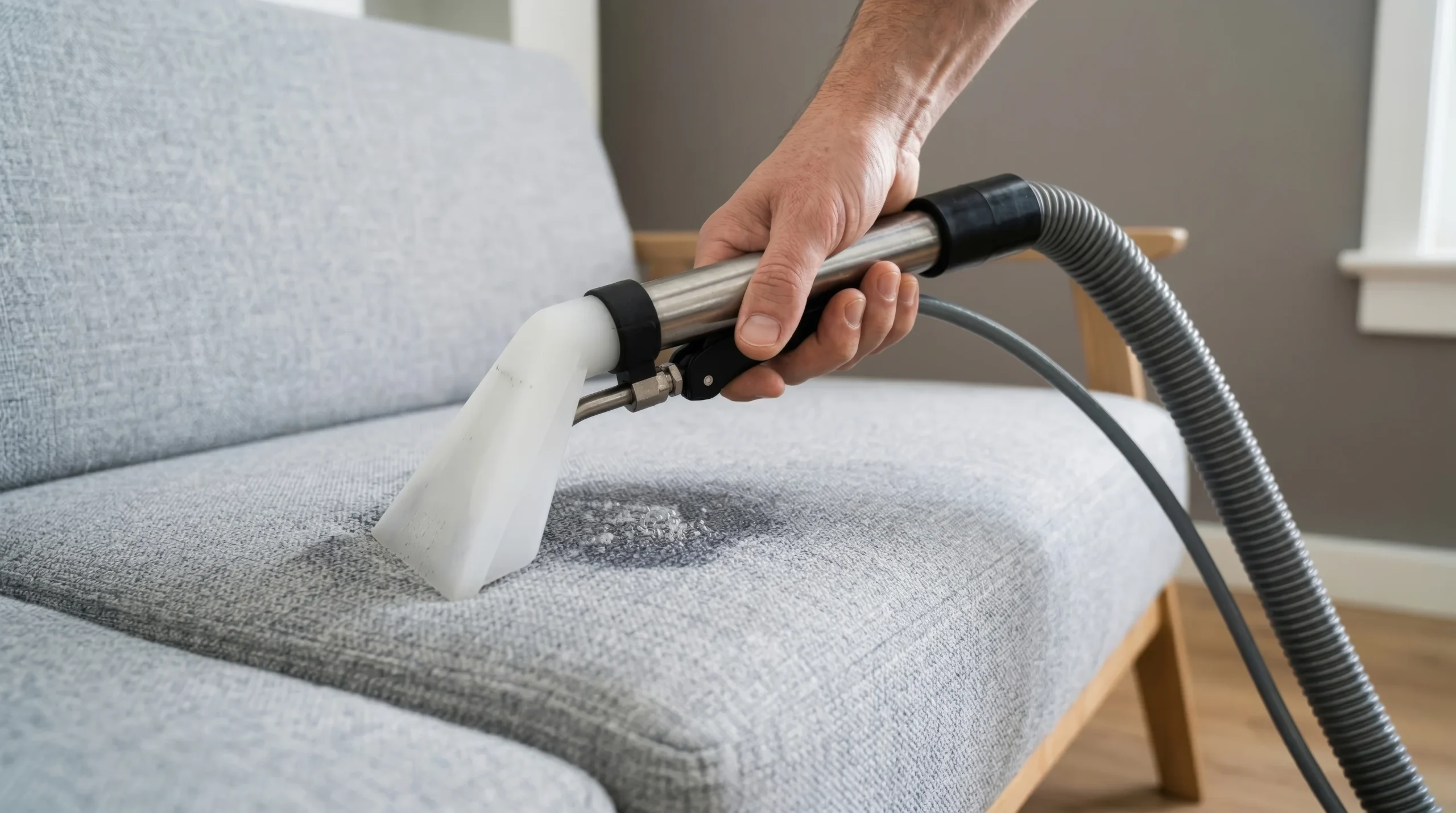
Ever looked at a stain on your sofa and thought, Did I just ruin this thing for good?
That panic is understandable. A coffee splash on fabric, a greasy handprint on leather, or a wine mark on velvet can make an expensive sofa feel one accident away from replacement. And in Thailand, where the wet season stretches across roughly six months, drying mistakes can turn a simple spill into a lingering odor, tide mark, or even mold problem if moisture sits too long. The U.S. EPA notes that in most cases, mold will not grow if wet materials are dried within 24 to 48 hours, and research reviews have found upholstered materials are important sources of dust mite allergen too.
That is why good sofa stain removal is not about throwing random cleaners at the problem. It is about using the right method for the right material, fast. In this guide, you will learn how to handle stubborn stains on fabric, leather, and velvet safely, what products to avoid, when to stop DIY, and what professional sofa cleaning in Thailand typically costs today.
What should you do first before any sofa stain removal?
Before you reach for soap, vinegar, or a viral “hack,” pause. The first rule of sofa stain removal is to identify the material and the care code. For fabric upholstery, major furniture-care guides use codes like W, S, W-S/WS, and X. In plain English: W means water-based cleaners are generally acceptable, S means solvent only, W-S means either may be used depending on the stain, and X means vacuum only. If you ignore that label, you can create a bigger problem than the stain itself. La-Z-Boy and West Elm both emphasize checking the code and testing any cleaner on a hidden area first.
Then do the boring thing people skip: blot, do not scrub. For fabric, the standard guidance is to remove excess liquid first, work from the outside toward the center so the stain does not spread, and avoid soaking the filling underneath. For leather, use a soft cloth and keep moisture minimal. For velvet, dab gently and avoid rubbing, because friction crushes the pile and leaves shiny patches.
Pro tip: If the spill is water-heavy, your real deadline is not “later tonight.” It is the next 24 to 48 hours. In Thailand’s wetter months, slow drying is exactly what turns a small accident into a musty upholstery problem.
How do you clean stubborn stains on fabric sofas without making them worse?
Fabric is where most people get overconfident. They see a stain, add too much water, scrub hard, and end up with a pale ring, matted fibers, or a smell trapped in the cushion. Safe sofa stain removal on fabric starts with vacuuming crumbs and dry debris first, then matching the cleaning method to the care code. For W-coded fabrics, water-based foam upholstery cleaner or mild shampoo is usually acceptable. For S-coded fabric, water is the enemy. For W-S, you have more flexibility, but you still want the least aggressive option first.
For most food and drink stains on W or W-S fabric, blot the spill, mix a small amount of neutral soap with water, and work gently from the outer edge inward. Rinse by blotting with plain water, not pouring it on. Then blot again until the area feels only slightly damp. That “slightly damp” part matters. Over-wetting is what pushes dirt deeper and creates water halos. La-Z-Boy’s guidance is explicit here: do not saturate, and do not assume steam cleaning is safe for every fabric.
Mini case study: the Bangkok condo coffee spill
A common real-life scenario: a polyester sectional in a condo, iced latte spills across the seat, and the owner scrubs with a soaked towel. Bad move. A better sequence is blot, vacuum when dry debris is gone, use a mild foam cleaner or neutral soap solution if the tag allows water, then dry with airflow and a fan. In a humid apartment, skipping the drying step is what usually causes the stale smell people blame on the stain.
Expert insight
Performance fabrics are becoming more common for a reason. La-Z-Boy describes performance fabrics as having superior stain resistance and easier cleanability, with tightly woven micro-denier constructions that help keep spills from penetrating immediately. If you are shopping for a new sofa in Thailand, that is one of the most useful 2026 buying trends to pay attention to.
What is the safest way to remove stains from a leather sofa?
Leather rewards restraint. That is the whole game. Most leather damage comes from people treating it like fabric. They use too much water, harsh detergent, bleach-based wipes, or random kitchen solutions, and then wonder why the finish cracks or dulls.
A safer approach is simple. Dust and vacuum regularly, especially the seams. For fresh spills, blot immediately with a clean absorbent cloth. Several leather-care guides recommend a soft cloth slightly dampened with distilled water for routine wiping, because minerals and impurities in tap water can leave residue or interfere with the finish. Pottery Barn even advises that ideally, the only cleaner you regularly put on leather is a little distilled water on a soft cloth unless the maker says otherwise.
For greasy food stains, less is more. American Leather advises blotting excess oil or grease and then leaving the spot alone rather than washing it aggressively; some grease marks will dissipate into the leather over time. Decor-Rest similarly warns against DIY treatment for harder leather stains like gum, grease, or red wine and recommends a professional leather cleaner instead. That may sound frustrating, but it is cheaper than stripping the finish off a premium sofa.
Mini case study: sunscreen on a leather armrest
This happens constantly in Thailand. Someone sits down after applying sunscreen, and the armrest gets a cloudy, oily patch. The correct move is to blot surface residue, wipe lightly with a soft cloth dampened with distilled water, and stop there unless your manufacturer specifically approves a leather cleaner. Aggressive rubbing is what turns a temporary stain into permanent finish damage.
Leather sofa cleaning tips that actually matter
The best leather sofa cleaning tips are almost boring: keep it out of direct sun, avoid heat vents, dust it often, and do not improvise with bleach, ammonia, or strong vinegar mixes. Pottery Barn notes that direct sunlight and heat dry the hide, making cracking and flaking more likely over time.
How do you clean stubborn stains from velvet sofas without crushing the pile?
Velvet is the material that scares people most, and honestly, for good reason. It looks luxurious because of the pile, and that same pile is easy to flatten, mark, or distort if you rub too hard. Good velvet sofa care is all about gentle handling and fast action.
The safest first response to a fresh stain is to dab with a dry cloth, not rub. NV Gallery advises using a clean cloth with lukewarm, slightly soapy water, then following with another cloth dampened with clean water, and letting it air dry without direct heat. Pottery Barn’s velvet-care advice also points toward gentle spot cleaning with a warm damp white towel rather than rougher methods.
Weekly maintenance matters more on velvet than on almost any other upholstery. Heal’s recommends gentle vacuuming with an upholstery attachment or using a soft hand brush once a week, while NV Gallery recommends light brushing to straighten fibers and remove fine particles. That routine does two things: it keeps dust from settling deep into the pile, and it reduces the “crushed seat” look that makes a velvet sofa seem older than it is.
Mini case study: red drink on a velvet accent sofa
Imagine a boutique hotel lobby or an Airbnb in Bangkok with a velvet accent sofa. A guest spills red fruit punch. The wrong move is vigorous rubbing with wet tissues. The right move is dry blotting first, then a barely damp cloth with mild soapy water, then a clean damp cloth, then air drying. Once dry, you can lift the fibers with a soft brush. NV Gallery notes that very light steam from a distance can help revive crushed fibers, but never blast the velvet with direct heat or saturate the whole panel.
Which cleaning products should you never use on sofas?
Here is the blunt answer: most household cleaners are too aggressive for upholstery.
On fabric, the biggest mistake is using the wrong chemistry for the care code. If the fabric is S-coded, water can leave rings and set you up for a bigger repair bill. On W-coded fabrics, solvents may be unnecessary and risky. On leather, bleach, ammonia, heavy detergents, and soaked wipes can strip oils and damage the finish. On velvet, alcohol-heavy or bleach-based products, abrasive sponges, and excess water are a terrible combination.
The second mistake is using too much product. Upholstery is not a countertop. When liquid goes beyond the surface and into the padding, you are no longer just cleaning a stain. You are managing trapped moisture. The EPA’s 24-to-48-hour drying guidance is a useful reality check here: if you cannot dry it properly, you should not soak it.
The third mistake is trusting “natural” DIY recipes just because they are online. Vinegar, baking soda, dish soap, steam, and essential oils all have their place, but none of them are universally safe across fabric, leather, and velvet. Material first. Recipe second.
When should you stop DIY and call a professional in Thailand?
There is a point where DIY becomes false economy. If the stain is oil-based, old, large, foul-smelling, or spread across multiple cushions, professional help is usually the smarter move. The same is true for leather with finish damage, velvet with widespread crushing or tide marks, and any sofa that smells musty after a wet clean.
The Thai market has moved hard toward on-site, quick-dry upholstery care. Bangkok providers currently advertise sofa cleaning starting around ฿1,390 to ฿1,500 for basic pieces, with larger sofas commonly listed around ฿2,200 for standard two-seaters, ฿2,700 for L-shape units, and ฿3,200 for U-shape sofas. Some providers also use minimum-service structures around ฿2,000 depending on seat count or job size. Hurryclean says some cleaned furniture can be used again in about 3 to 5 hours under normal humidity, which is exactly the kind of quick-dry positioning you want in Thailand.
That price range matters because it changes the decision. If you are about to experiment with a ฿300 cleaner on a velvet or leather sofa worth tens of thousands of baht, paying a pro a few thousand baht can be the more rational choice. Not glamorous. Just true.
How can you prevent future stains and keep sofas cleaner for longer?
The best sofa stain removal strategy is prevention dressed up as routine. Upholstered furniture can harbor dust and allergen reservoirs, and the EPA specifically recommends using a vacuum with a HEPA filter on fabric-covered furniture to reduce dust build-up. That does not replace stain treatment, but it dramatically reduces the grime that makes every spill harder to clean later.
For fabric sofas, vacuum often and rotate cushions so one seat does not become the family dumping zone. For leather, keep the sofa away from direct sun and wipe it lightly with a soft cloth on a regular schedule. For velvet, brush or vacuum weekly and air the room to manage moisture. In Thailand, that last part is not optional theater. The wet season and humid shoulder months make slow drying a genuine upholstery risk.
You can also reduce future cleaning drama by changing what you buy. Performance fabrics, stain-resistant weaves, washable covers where practical, and designated throws for high-traffic seats are not exciting design decisions. They are profitable ones, especially if you manage rental property, a clinic waiting area, or hospitality seating in Thailand.
Quick comparison: what works best by sofa type?
The care logic below is distilled from major upholstery-care guides and current furniture-brand recommendations.
| Sofa type | Safest first move | Usually okay | Usually avoid | Call a pro when |
| Fabric | Blot, check care code, test hidden area | Mild foam or neutral soap on W/W-S fabrics | Saturating cushions, ignoring S or X codes | Old stains, odor, large areas, delicate blends |
| Leather | Blot fast, use soft cloth | Light wipe with distilled water, approved leather care | Bleach, harsh detergent, heavy water, aggressive scrubbing | Grease, ink, wine, finish damage, cracking |
| Velvet | Dab gently, no rubbing | Very light soapy-water spot clean, soft brush after drying | Excess water, abrasive sponges, strong chemicals | Tide marks, crushed pile, large visible stain zones |
FAQ
What is the fastest sofa stain removal method for fresh spills?
The fastest safe method is blotting immediately, identifying the material, and using the correct care-code method. Do not scrub, and do not soak the cushion. Fast action matters because wet upholstery should ideally be dried within 24 to 48 hours to reduce mold risk.
How do I clean fabric sofa stains without leaving a water ring?
Blot first, use minimal moisture, clean from the outer edge inward, and blot again with plain water only if your care code allows it. The ring usually comes from over-wetting, not under-cleaning. This is why people trying to clean fabric sofa stains often make them look worse before they look better.
Are baby wipes safe for leather sofa cleaning?
Not automatically. Many wipes contain detergents, fragrances, or preservatives that are not ideal for leather finishes. Safer leather sofa cleaning tips start with a soft cloth and a little distilled water unless the maker specifically recommends another product.
Can I use steam on a velvet sofa?
Use caution. Velvet does not like aggressive moisture or heat. Light steam from a distance may help lift crushed fibers after the stain is dry, but direct heat or heavy steaming can distort the pile and worsen marks. That is why careful velvet sofa care usually beats force.
How much does professional sofa cleaning cost in Thailand?
In Bangkok, current advertised pricing commonly starts around ฿1,390 to ฿1,500 for smaller pieces, with around ฿2,200 for standard sofas, ฿2,700 for L-shape sofas, and ฿3,200 for U-shape pieces depending on provider and job structure.
Is sofa stain removal different in Thailand’s rainy season?
Yes. The method stays similar, but drying discipline matters more. Thailand’s wet season lasts about six months, and slow drying increases the odds of mustiness, water rings, and microbial problems after wet cleaning. Use fans, ventilation, and as little moisture as the material allows.
When is DIY sofa stain removal not worth the risk?
When the sofa is velvet, premium leather, heavily soiled, or carrying a stain that is oily, old, smelly, or spread over a large area. In those cases, professional cleaning is often cheaper than permanent damage. Local Thai providers now commonly market quick-dry, on-site systems for exactly this reason.