
Have you ever walked into a five-star suite and wondered why it feels instantly calmer, cleaner, and more expensive than most homes ever do?
That feeling is not an accident. It is the result of systems. The best hotel housekeeping teams do not clean harder because they are magical. They clean smarter because every detail is standardized, inspected, timed, and repeated. Forbes Travel Guide’s inspectors assess luxury properties against up to 900 objective criteria, and modern hospitality operations increasingly rely on structured checklists, real-time task management, and tight coordination between housekeeping and maintenance to keep standards consistent.
That matters at home too. Indoor air pollutants are often 2 to 5 times higher indoors than outdoors, and Americans spend about 90% of their time inside. Meanwhile, the CDC still recommends basics that many households neglect: weekly bedding washes, HEPA-filter vacuuming, and keeping humidity around 30% to 50%.
In this guide, you will learn how to borrow the most effective hotel housekeeping habits and turn them into practical, elegant routines for a luxury home. Not the fussy nonsense. The real stuff: workflow, tools, air quality, linen care, and the small finishing touches that create a truly polished space.
What does hotel housekeeping actually do differently from regular home cleaning?
The biggest difference is this: hotel housekeeping is process-driven, not mood-driven.
Most people clean reactively. A spill happens, guests are coming, the bathroom looks rough, so they scramble. Hotels do the opposite. They use repeatable cleaning sequences, defined room standards, inspection points, and scheduled resets so nothing depends on memory or motivation. Cornell research on housekeeping performance makes the point clearly: rooms can look clean while the actual cleaning process varies widely, which is why consistency matters so much.
That is also why luxury homes often disappoint despite expensive finishes. Marble counters, custom millwork, and imported linens do not create a refined environment on their own. If the workflow is sloppy, the space will still feel slightly off. Smudged chrome. Dust on lampshades. A stale textile smell. A burnt-out bulb nobody replaced.
Expert insight: The real secret is not intensity. It is sequencing. Hotels break cleaning into zones, recurring frequencies, and inspection standards. In 2026, many properties are pushing this further with digital checklists and live room-status coordination, which reduces missed steps and turns housekeeping into a system rather than a guessing game.
For a home, that means you stop asking, “What needs cleaning?” and start asking:
What is the daily reset?
What is the weekly standard?
What is the monthly deep-clean list?
What gets inspected, not assumed?
That one mental shift changes everything.
Which hotel housekeeping standards matter most in a luxury home?
Not every hotel rule belongs in a residence. You do not need cart staging outside the bedroom or turnover times worthy of a resort. But several hotel cleaning standards translate perfectly.
Start with high-touch surfaces. AHLA’s current Safe Stay guidance still emphasizes daily attention to surfaces touched by multiple people and special focus on guest-room touchpoints such as remotes, handles, faucet levers, light switches, phones, and control panels. Forbes Travel Guide also recommends making sanitizing processes visible and keeping hygiene stations convenient and functional.
Then there is linen handling. AHLA recommends laundering sheets and towels according to manufacturer instructions, using the warmest permissible water setting where possible, drying completely, and avoiding vigorous shaking of dirty linens. That is not hotel fussiness. It is a contamination-control rule that also protects fabric life and indoor air.
Third, air quality. AHLA’s updated guidance highlights ventilation, filtration, filter checks, and even MERV-13 upgrades where feasible. That lines up with EPA and CDC guidance that links better filtration, reduced moisture, and lower indoor pollutant loads to healthier indoor environments.
So which standards should you steal first?
- Clean top-priority touchpoints daily.
- Use a checklist, not memory.
- Treat linens and soft goods as part of housekeeping, not an afterthought.
- Pair cleaning with inspection: bulbs, leaks, loose hardware, and broken dispensers.
- Protect air quality with filtration, ventilation, and lower-fragrance products.
That is the backbone of real luxury home cleaning tips. Everything else is decoration.
How should you apply hotel housekeeping to bedrooms and living spaces?
A five-star bedroom does not feel luxurious because it is empty. It feels luxurious because it is edited.
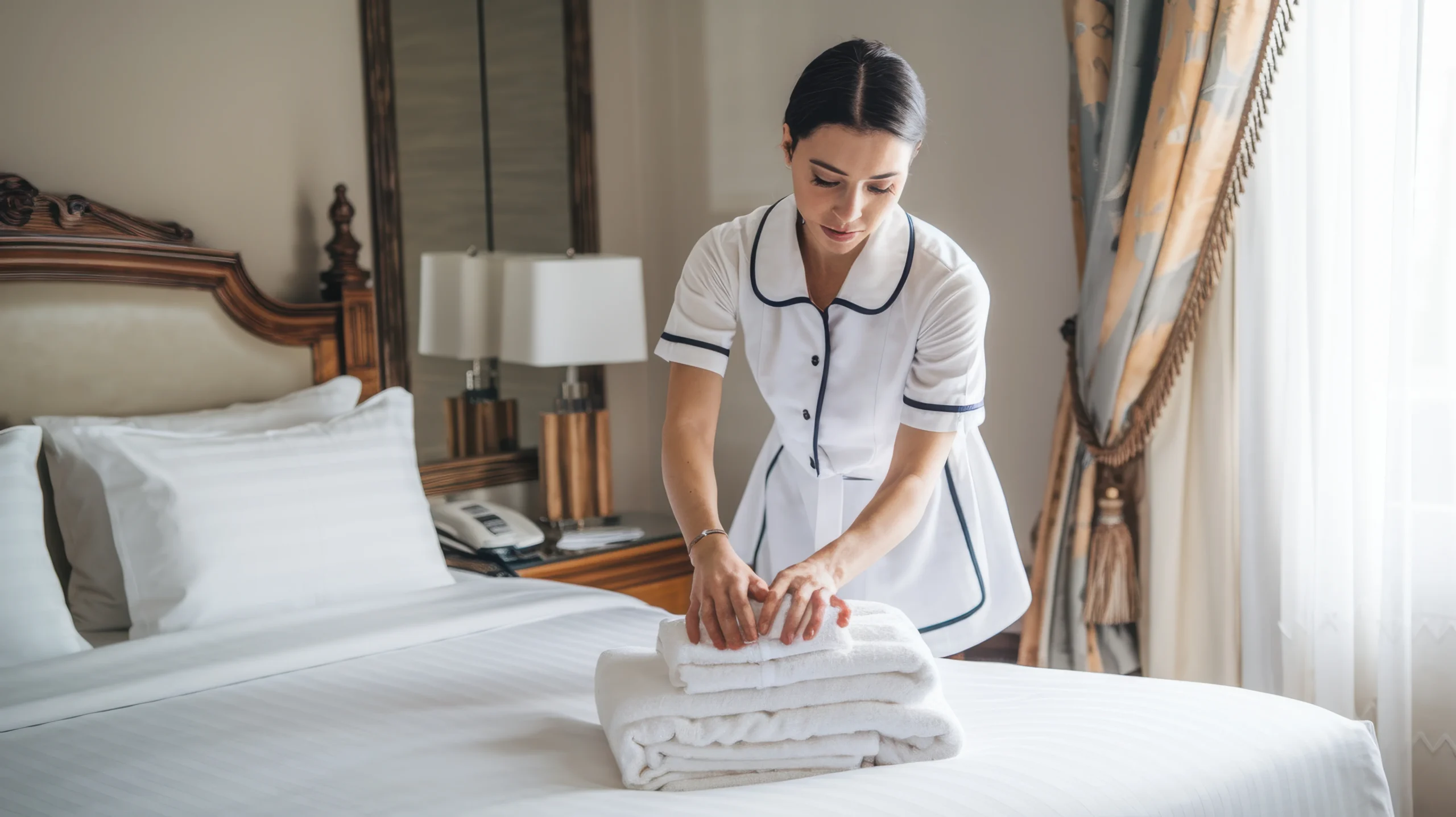
That means the room is visually quiet, physically clean, and ready for use. In hotel terms, it is guest-ready. The bed is crisp. Surfaces are dust-free. Lighting works. Upholstery smells neutral. Nothing looks tired. HotelRunner’s 2026 housekeeping guidance is blunt about this: small details like crisp sheets, clean mirrors, well-placed toiletries, and replacing worn items shape the guest experience.
Here is the home version.
Start with the bed zone
The CDC recommends washing bedding weekly, drying it completely, using allergen-proof covers where needed, and keeping relative humidity around 30% to 50% to reduce triggers such as dust mites. If you want a luxury bedroom result, this is non-negotiable. Beautiful bedding that smells stale is fake luxury.
Then handle surfaces in order
Dust high to low. Ceiling corners, lamp tops, headboards, frames, tables, baseboards. If you dust low surfaces first, you are just redistributing debris and doing the job twice. Modern hotel housekeeping checklists explicitly reinforce high-to-low, detail-driven workflows because rushed room turns are exactly when little misses happen.
Finish with staging
This is where many homes collapse. A hotel room is not merely cleaned; it is reset. Curtains sit properly. Throws are folded consistently. Cords disappear. Water glasses are fresh. Lighting feels intentional.
Real-world example: At the Forbes Travel Guide Five-Star Altira Macau, rooms are serviced twice daily, and the turndown details include closed curtains, dimmed lights, bottled water, a bucket of ice, and the next day’s menu left in the room. That is not just cleaning. It is atmosphere engineering.
Borrow the principle, not the ritual. Your version might be simple: align cushions, remove visual clutter, reset bedside water, and check the scent profile before leaving the room. That is how professional cleaning hacks become lived luxury.
How do you bring hotel housekeeping discipline into bathrooms without overdoing it?
Bathrooms are where the illusion of luxury lives or dies.
People obsess over stone, brass, and premium fixtures, then ignore water spots, grout haze, mirror streaks, and product clutter. Hotels do not make that mistake. AHLA guidance specifically flags hard, non-porous high-touch guest-room items like toilet seats and handles, faucet handles, and other frequently touched surfaces for focused cleaning and disinfecting.
The right bathroom method is simple.
Clean from dry to wet and from cleaner zones to dirtier zones. Mirrors and upper surfaces first. Vanity and hardware next. Sink basin after that. Toilet later. Floor last. Use separate cloths for different zones to reduce cross-contamination. EPA materials on safer cleaning also note that microfiber tools can remove as much as 99% of germs while physically removing dirt, grime, molds, and allergens that can trigger asthma symptoms.
What matters most in a luxury bathroom is not “more product.” It is residue control. Too much cleaning leaves film. Film attracts dust and fingerprints. Then the room looks dull again within hours.
Pro tip: Wipe chrome and glass as a final pass, not mid-clean. Otherwise, you will splash them again and create extra work.
Mini case study: One reason five-star bathrooms photograph so well is that they are maintained like inspection zones, not casual family spaces. The towel fold, the faucet shine, the aligned amenities, the empty trash liner, the neutral smell. Each alone is small. Together, they signal standard. That is the real lesson of hotel cleaning standards: luxury is cumulative.
What tools and products do professionals rely on, and which ones are actually worth buying?
Let’s cut through the clutter. Most people buy too many products and not enough tools.
The smartest hotel housekeeping setups prioritize a short list: quality microfiber cloths, dedicated bathroom cloths, a HEPA-filter vacuum, a pH-appropriate cleaner for delicate finishes, a glass cleaner that does not streak, a neutral floor solution, and enough laundry capacity to rotate linens properly. CDC guidance specifically recommends HEPA-filter vacuums for reducing asthma triggers in the home, and EPA materials highlight microfiber’s strong performance in physically removing soil and germs.
The product mistake wealthy homeowners make most often is fragrance overload. A room that screams “cleaning chemical” does not feel luxurious; it feels managed badly. NIEHS warns that chemicals used in certain cleaners can affect indoor air quality, and EPA notes that levels of several organics average 2 to 5 times higher indoors than outdoors.
So the winning formula is:
- fewer products
- better cloth discipline
- strong filtration
- correct surface chemistry
- lighter scent load
2026 trend to watch: Hotels are increasingly running housekeeping through digital SOPs and real-time maintenance coordination, not paper memory. The home version is not complicated. Use a recurring digital checklist with separate tags for cleaning, restocking, and repair. When a hinge loosens, caulk cracks, or a lamp flickers, log it immediately. Hotels know something homeowners forget: unresolved maintenance makes clean rooms feel dirty.
That is one of the most underrated luxury home cleaning tips in this entire piece.
How do hotels keep air, linens, and soft furnishings feeling fresh instead of just looking clean?
Because they understand that cleanliness is sensory, not visual.
AHLA’s current guidance on indoor air quality is unusually useful here. It recommends ventilation, filter checks, upgrading to MERV-13 where possible, scheduling ventilation before and after occupancy, auditing air quality, and even using portable air cleaners in denser spaces when needed.
That matters because stale air ruins everything. EPA says indoor pollutant levels are often 2 to 5 times higher than typical outdoor concentrations, while NIEHS notes that mold, smoke, vapors, and chemicals from indoor products can all affect health and comfort.
For luxury homes, translate that into four habits:
1. Ventilate with intention
Open windows when conditions allow. Run bath exhaust fans long enough. Do not trap moisture after showers.
2. Upgrade filtration
Check HVAC filters on schedule. If your system allows, move toward higher-efficiency filtration rather than treating dust as a moral failure.
3. Deep-clean textiles on a schedule
Curtains, upholstery, rugs, decorative pillows, and throws hold odor and particulates. They cannot be ignored just because they look expensive.
4. Control humidity
CDC recommends keeping humidity around 30% to 50%. Too damp, and you feed dust mites and mold. Too dry, and the space feels harsh and static-heavy.
Real-world example: In Los Cabos, 84 of 85 hotels completed and maintained verification on more than 360 health security standards, including hygiene protocols, cleaning procedures, ventilation, and health communication. That is the broader hospitality lesson: elite cleanliness now includes air systems, not just shiny counters.
What does a five-star daily reset actually look like at home?
This is where hotel housekeeping becomes practical.
You do not need a live-in team. You need a 15-minute non-negotiable reset. That single habit prevents the weekend “deep clean from hell” that burns people out and never quite catches up.
The 15-minute immaculate-home checklist
- Make the bed fully, not halfway.
- Open or reset curtains intentionally.
- Remove bedside clutter, chargers, cups, receipts.
- Wipe vanity and kitchen touchpoints.
- Do a mirror and faucet pass in the main bathroom.
- Empty visible trash before it looks full.
- Fold throws, align cushions, straighten rugs.
- Replace hand towels if they look tired.
- Do a quick floor scan for crumbs, dust, pet hair, and tracked debris.
- Note any maintenance issue immediately.
That is it. Not dramatic. Just disciplined.
Hotels use structured checklists because missed details compound fast during room turnover, and the same logic applies at home. Mews and RoomMaster both emphasize that standardized housekeeping lists reduce inconsistency, improve quality control, and prevent small misses from becoming service failures.
Expert insight: If your home never quite feels finished, the problem is probably not deep cleaning. It is reset failure. Deep cleaning restores. Resetting preserves.
What mistakes make a home feel expensive but not truly immaculate?
This is the part people usually do not want to hear.
First, they clean visibly dirty areas and ignore invisible ones. Air filters, mattress covers, fabric odors, HVAC vents, and dusty lampshades quietly wreck the experience.
Second, they over-sanitize and under-clean. Cleaning physically removes dirt. Sanitizing and disinfecting are not substitutes for actual soil removal. EPA’s safer-cleaning materials make that distinction clearly.
Third, they buy premium finishes and use the wrong chemistry on them. Natural stone, specialty woods, unlacquered metals, and performance textiles all need surface-specific care. Treat them all the same and you slowly destroy the very look you paid for.
Fourth, they do not inspect. Cornell’s housekeeping research is useful here again: a space can appear clean while the process behind it is inconsistent. That inconsistency is where standards collapse.
Fifth, they confuse “decorated” with “luxurious.” Real luxury is edited. Fewer items, better maintained, reset consistently.
Mini case study: Forbes Travel Guide’s entire inspection model is built on objective, repeatable criteria rather than vague impressions. That is why five-star spaces feel dependable. Not because they are ornate, but because they are reliably excellent.
If you want the fastest upgrade, stop chasing more products and prettier baskets. Build a sharper standard.
Conclusion
The real power of hotel housekeeping is not sparkle. It is control.
Five-star spaces feel exceptional because they are run on standards: touchpoint cleaning, linen discipline, airflow management, inspection culture, and daily resets. When you apply those same ideas at home, the result is not just a cleaner room. It is a calmer, healthier, more intentional environment that actually lives up to the price tag of a luxury property.
So do not copy hotels superficially. Copy their systems. Build your own room-ready checklist. Upgrade your filtration. Wash bedding on schedule. Cut visual clutter. Treat maintenance as part of cleanliness. Use hotel housekeeping as a standard, not a style.
That is the difference between a home that looks expensive in photos and one that feels impeccable the second someone walks in.
FAQ
What is the biggest hotel housekeeping habit homeowners should adopt?
Use a checklist. Luxury hotels do not trust memory, especially during fast turnovers. A repeatable checklist creates consistency, reduces missed details, and makes cleanliness measurable rather than emotional. That one change usually improves a home faster than buying more products.
How often should bedding be washed to match hotel cleaning standards?
For most homes, weekly is the smart baseline. The CDC recommends washing bedding weekly, drying it fully, and using allergen-proof covers where appropriate. In a luxury home, that schedule helps preserve both comfort and the fresh, polished feel people associate with upscale hospitality.
Are microfiber cloths really one of the best professional cleaning hacks?
Yes, when used properly. EPA materials note that microfiber tools can remove as much as 99% of germs while physically lifting dirt and allergens. The catch is discipline: separate cloths by zone, wash them correctly, and do not drag one dirty cloth across the whole house.
Why does a clean home still sometimes smell stale?
Because visual cleaning is only half the job. Indoor air quality, humidity, soft furnishings, and HVAC filtration all shape how a space feels. EPA and NIEHS both warn that indoor pollutants and chemicals can build up indoors, so stale rooms often need ventilation and textile care, not just surface wiping.
Should luxury homes use scented products to smell like hotels?
Lightly, if at all. Over-fragrancing usually backfires and can worsen indoor air quality. A better strategy is neutral cleanliness: clean textiles, controlled humidity, ventilation, and lower-residue products. The goal is fresh air and clean fabric, not a cloud of synthetic scent.
How do hotels make rooms feel so “finished” all the time?
Because cleaning is paired with staging. Details such as aligned linens, working lighting, refreshed water, clean mirrors, and controlled clutter matter. Five-star rooms are not simply cleaned; they are reset to a standard. That same principle works beautifully in a luxury residence.