

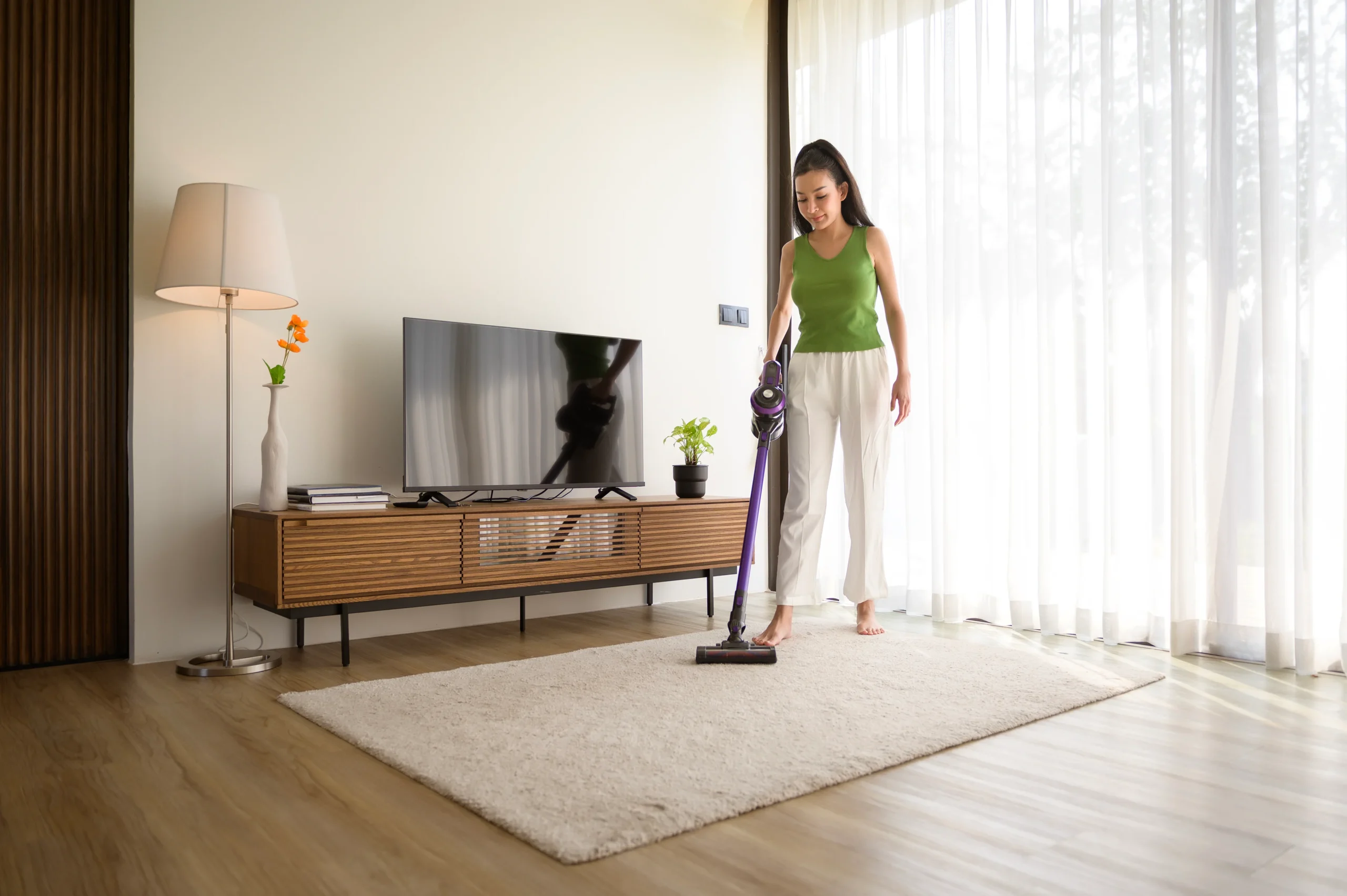
Ever feel like your home is asking for a second full-time job?
That’s the quiet frustration a lot of people live with. You finish work, answer messages, manage errands, maybe deal with kids or guests, and then the sink reminds you it’s still not done with you. The hard part is not just the mess. It’s the mental drag that comes with always seeing one more thing to wipe, fold, scrub, or put away. U.S. time-use data shows people already spend an average of 2.01 hours a day on household activities, including about 24 minutes a day on interior cleaning alone. At the same time, survey data from the American Cleaning Institute found that 87% of Americans say they feel their best mentally and physically when they have a clean home.
That gap matters. A cleaner home feels better, but keeping it that way consistently is where most households struggle. That’s exactly where housekeeping services can change your day-to-day life. Done right, they do far more than make a house look presentable. They return time, reduce background stress, support a healthier environment, and create routines that make the whole week feel lighter. In this guide, you’ll see the seven biggest quality-of-life gains, the most important maid services advantages, and how to tell whether hiring help fits your real life, not just your ideal one.
Quick answer: Housekeeping services boost quality of life by saving time, lowering stress, improving indoor hygiene, reducing cleaning backlogs, protecting home surfaces, and making daily routines more predictable. Those benefits line up with time-use data, public-health cleaning guidance, and survey findings on mood, focus, and stress.
Expert insight: As Brian Sansoni of the American Cleaning Institute put it, cleaning means “so much more now than it used to.” That shift is exactly why more households now treat cleaning as a well-being decision, not just a chore.
1) Why do housekeeping services give you time back every single week?
This is the most obvious benefit, but people still underestimate it. Cleaning rarely shows up as one neat block on your calendar. It leaks. Ten minutes wiping counters. Fifteen folding laundry. Twenty tackling bathrooms you’ve been avoiding. Another thirty because guests are coming over tomorrow. The result is death by a thousand interruptions. When you hire housekeeping services, you stop paying for cleaning with fragments of your attention.
That matters more than most people admit. The Bureau of Labor Statistics shows that people already spend substantial time on household work every day, and interior cleaning is only one slice of that total. When a professional team handles recurring resets, you free up not just labor time but decision time. You’re no longer spending Saturday morning figuring out whether to mop first, declutter first, or pretend you don’t see the baseboards.
A better way to think about it: you are not buying a spotless floor. You are buying back your highest-energy hours.
Composite mini case study: A dual-income couple with two school-age kids switched from “weekend panic cleaning” to biweekly service. What changed was not just cleanliness. Saturday mornings stopped being recovery work. One parent got gym time back. The other stopped doing late-night kitchen resets before Monday. The house didn’t become perfect. It became manageable.
That’s one of the biggest maid services’ advantages: they compress recurring chores into a system, instead of letting them sprawl across your week.
2) Can housekeeping services really reduce stress and mental overload?
Yes. And this is where the benefit goes from practical to personal.
A clean home doesn’t just look better; it changes how the space feels in your nervous system. The American Cleaning Institute’s 2024 data found that 60% of respondents said a clean home decreases stress and anxiety, 66% said it boosts mood, and 47% said it helps them focus. A peer-reviewed study indexed on PubMed also found that wives who described their homes as more stressful or cluttered had flatter daily cortisol patterns, a profile associated with poorer stress regulation.
That lines up with what people experience in real life. Clutter keeps sending tiny signals that something is unfinished. A greasy stovetop is not just a stovetop; it is one more loose end. An overflowing laundry chair is not just laundry; it is visual proof that your list is still winning. Housekeeping services reduce that background noise by preventing your home from tipping into “problem mode.”
This is also where your home cleaning lifestyle improves. Instead of reacting to buildup, you live in a space that resets on purpose. There’s a psychological difference between a home that occasionally gets cleaned and one that stays under control.
Common mistake to avoid: Hiring cleaners once, expecting permanent peace, then slipping back into chaos. Stress relief usually comes from consistency, not from a single heroic deep clean.
3) How do housekeeping services make your home healthier?
A healthier home starts with regular, correct cleaning, not random bursts of effort.
CDC guidance is blunt on the basics: cleaning with soap or detergent removes germs and dirt, and cleaning alone removes most harmful viruses or bacteria from surfaces. EPA guidance adds that regular cleaning is one of the most effective ways to reduce indoor biological contaminants, while frequent cleaning helps reduce dust, pet dander, and other allergens. EPA also recommends damp dusting, weekly vacuuming, and low indoor humidity to limit dust mites and mold. AAFA echoes that advice and recommends controlling clutter, washing bedding in hot water, and using high-quality or certified vacuums so allergens do not get blown back into the air.
That’s where the real professional cleaners benefits show up. A trained team is more likely to use a repeatable process, clean high-touch areas consistently, and handle dust removal with better technique than most tired homeowners doing a rushed end-of-day wipe-down. The result is not a sterilization theater. It is a more controlled, lower-buildup environment.
Pro Tip: If anyone in your home has allergies, asthma triggers, pets, or frequent visitors, ask potential providers about three things: HEPA-capable vacuuming, damp dusting methods, and whether they can work with lower-toxicity products. Those choices matter more than fancy branding.
Composite mini case study: A work-from-home consultant with seasonal allergies kept blaming “bad air” for afternoon fatigue. What actually helped was a recurring routine focused on dusting fabric-heavy rooms, vacuuming upholstery, and keeping bedroom textiles cleaner. No miracle. Just less particulate buildup and fewer triggers.
4) Why do housekeeping services help you stay consistently organized?
Because most homes do not collapse from one big mess. They drift.
A cluttered home usually happens through small delays: dishes left overnight, papers stacked “for later,” clean clothes never fully put away, crumbs ignored because dinner ran late. The problem is not laziness. It is friction. Once the environment crosses a certain threshold, organization starts to feel harder than it should.
That is why housekeeping services often improve more than cleanliness. They create cadence. And cadence is what turns an exhausting house into a livable one. When surfaces are regularly reset, floors are routinely handled, and bathrooms do not slide into crisis mode, the whole house becomes easier to maintain between visits. You make fewer avoidance decisions because the workload never gets absurd.
There is also a measurable mental upside. ACI’s 2024 survey found that a clean home is associated with better focus, more productivity, and a stronger sense of accomplishment. That matters for anyone trying to build a calmer home cleaning lifestyle, especially remote workers, parents, and people who simply think better in orderly spaces.
Think of recurring cleaning like interest in reverse. Instead of buildup compounding against you, small resets compound in your favor.
Actionable takeaway: Use professional visits for “reset work” and keep your own jobs limited to maintenance: dishes, daily pickup, and laundry. Do not duplicate what you are paying to outsource.
5) Can housekeeping services protect your furniture, fixtures, and finishes?
Absolutely, and this benefit is underrated because the damage from neglect is usually slow.
Dust, moisture, grease, soap scum, and hard-water residue do not always look catastrophic right away. But left alone, they wear surfaces down. EPA notes that indoor biological contaminants and moisture problems can compromise a building’s structure and reduce its lifespan. Mold can deteriorate materials, and ongoing buildup becomes more expensive when ignored.
Now bring that idea down to the room level. Kitchen grease gets tackier and harder to remove. Bathroom mineral deposits stain faster when ignored. Dust settles into vents, blinds, upholstery, and textured finishes. Even if nothing is “ruined,” the effort required to restore it later is higher. Routine service interrupts that cycle.
This is another place where the professional cleaners benefits are not glamorous, but they are real. Good cleaners spot the early warning signs homeowners normalize: residue around fixtures, damp corners, grime on touchpoints, or buildup under movable objects. That kind of preventive attention protects the lived-in quality of the home.
2026 snapshot: One important shift this year is that more providers are emphasizing product transparency and safer formulations. The EPA’s Safer Choice program highlights products that perform while using ingredients considered safer for people and the environment, and industry guidance around that standard is becoming more visible in service conversations.
In plain English: smarter products and steadier upkeep usually beat harsh chemicals used too late.
6) How do the advantages of maid services improve family routines and relationships?
Because mess is rarely just mess. It is often unspoken labor.
When cleaning is inconsistent, someone usually absorbs the difference. Often quietly. Often resentfully. BLS time-use data shows women still spend more average time per day than men on total household activities, and also more on interior cleaning specifically. That gap alone explains why cleaning can become a relationship issue long before anyone says it out loud.
This is where the best maid services advantages become social, not just practical. Outsourcing repetitive cleaning reduces the number of negotiations families keep having on loop: whose turn is it, why is the bathroom still dirty, why am I always the one noticing this, why does every weekend disappear into upkeep? ACI’s survey data even found that 60% of Americans say they feel more attracted to their partner when that partner takes initiative to clean. That stat is funny on the surface, but the deeper point is serious: cleaning is tied to care, effort, and visible support.
Composite mini case study: A household with one remote worker and one shift-based worker kept fighting over “who had more time” to clean. A recurring service did not solve every tension. It solved the recurring trigger. Once the weekly reset became external, the conversations changed from blame to maintenance.
That is a quality-of-life upgrade most people do not appreciate until they feel it.
7) Are housekeeping services worth it for productivity, hosting, and peace of mind?
For many households, yes, because the biggest gain is reliability.
You know the scramble: company is coming, and suddenly you are doing six jobs at once. The American Cleaning Institute’s 2025 fall survey found that 91% of Americans make a concerted effort to clean before entertaining guests, 71% focus on the spaces guests will see, and 44% go further by disinfecting surfaces before guests arrive. In other words, most people are not just cleaning for aesthetics. They are cleaning for comfort, confidence, and health.
Regular housekeeping services reduce that pre-guest panic because your baseline is already higher. They also make home-based work easier. If you take calls from your dining table, host clients, or simply want to stop apologizing for your house, a maintained environment removes a weird amount of friction from daily life.
This is also where 2026 buying behavior is shifting. Market reporting this year points to growing demand for recurring service packages and digital booking, which makes sense: people increasingly want predictable cleaning without constant rescheduling or one-off admin. Pair that with greater interest in greener products and transparent ingredient standards, and the service is becoming more tailored than it used to be.
Pro Tip: If you are comparing providers, do not ask only about price. Ask about checklist consistency, product options, rotation items, rescheduling rules, and whether they offer recurring plans. The right service is not the cheapest one. It is the one you can actually rely on.
A practical checklist before you hire
Use this quick filter before choosing a provider:
- Do they offer a clear recurring checklist, not vague promises?
- Can they explain what is included in standard cleaning versus add-ons?
- Do they support safer-product requests or EPA Safer Choice preferences?
- Do they have a process for allergy-sensitive homes or pet-heavy homes?
- Can they rotate deeper tasks across visits?
- Do they make scheduling easy enough that you will actually keep the service?
That last point matters. The best home cleaning lifestyle is not built on motivation. It is built on systems you will keep.
Conclusion
The best argument for housekeeping services is not that they make your home look nicer. It is that they make your life run better.
They give you time back. They reduce visual and mental overload. They support a healthier environment with less dust, fewer allergens, and more consistent surface care. They help prevent buildup that damages finishes. They cut recurring household tension. And they turn hosting, working from home, and day-to-day living into something less reactive and more controlled. Public-health guidance, time-use data, and survey evidence all point in the same direction: cleanliness is not just cosmetic. It shapes how a home functions and how the people inside it feel.
So here is the smarter question: not “Can I clean my own house?” Of course you can. The real question is whether you should keep spending your best hours doing work that could be systematized.
If you are evaluating housekeeping services, start small but start strategically. Test a recurring schedule. Define what matters most in your home. Ask better questions. Then judge the service by one standard that actually matters: does your week feel easier after they leave?
FAQ
How often should I book housekeeping services?
Most households do well with biweekly housekeeping services, while larger families, pet owners, and high-traffic homes often benefit from weekly visits. The right frequency depends on how fast dust, laundry spillover, kitchen use, and bathroom traffic build up in your space. Regular cleaning matters most when you want to prevent backlog.
Are housekeeping services worth it if I already clean?
Usually, yes. The value is not just task replacement. It is consistency, time recovery, and a lower stress baseline. Many people still clean between visits, but the big difference is that the home no longer keeps slipping into catch-up mode. That is where the real maid services advantages show up.
What is the difference between housekeeping and deep cleaning?
Routine housekeeping usually covers recurring maintenance like floors, bathrooms, kitchens, dusting, and visible resets. Deep cleaning goes further into buildup zones such as baseboards, behind furniture, detailed bathroom grime, or neglected surfaces. Think of housekeeping as maintenance and deep cleaning as reset-and-restore.
Can professional cleaners’ benefits help with allergies?
They can help when the service uses the right methods. EPA and AAFA both point to frequent cleaning, damp dusting, washing bedding, controlling humidity, and using good vacuums to reduce dust and allergen buildup. So yes, the professional cleaners’ benefits can be meaningful, especially when the provider understands allergy-sensitive homes.
Are eco-friendly housekeeping services effective?
Yes, when the products are well selected. The EPA’s Safer Choice program exists specifically to identify products that perform while using ingredients considered safer for human health and the environment. In 2026, safer chemistry is becoming a more visible part of service selection, not just a marketing add-on.
How should I prepare before cleaners arrive?
Do not pre-clean. Just reduce clutter that blocks the work: pick up valuables, move laundry piles, clear countertops if possible, and note priority areas. The goal is to let the cleaners spend time actually cleaning, not sorting around your stuff. That improves efficiency and supports a more sustainable home cleaning lifestyle.
What should I ask before hiring a housekeeping company?
Ask what is included, what rotates, what products they use, whether they bring their own supplies, how rescheduling works, and how they handle pet homes, allergies, or special surface requests. If a company cannot explain its process clearly, that is usually a warning sign.